Monday, October 5, 2015

un hommage à l'oignon

Parents of Multiracial Baby Proud of Their Creation

Tukwila, WA--Local parents, Jeanine Goddard, 32, and Ahn Tran, 34, are delightfully satisfied with the multiracial specimen they've created. When the two got engaged in 2010, they were nervous about the prejudice they might face as an interracial couple, especially among the older generations in their conservative families. But now that they have just welcomed their first child into the world, their fears have been assuaged by the many positive compliments received by family, friends, and random strangers about their multiracial offspring's cuteness.

"When the cashier at Safeway assured me that mixed babies are the cutest kind of baby, I knew I had made the right choice to reproduce," said Goddard, visibly proud of her accomplishment. According to Tran, Goddard's Vietnam-born husband, "Friends shower us with compliments about its almond-shaped eyes and adorable freckles, saying it could be a model someday with such an 'exotic' look."

While enjoying the attention they have garnered with their first piece of progeny, Goddard and Tran are already receiving demands from coworkers, community members, and childcare workers to produce a multiracial sibling. "I can't wait to see what the next one looks like! More Asian or more white? It's like the Magic 8 Ball of baby making!" commented an unknown passerby, stroking child number one's hair.

The happy new parents never could have imagined such a positive response, given their own families' homogeneous blood pools. Affirmed Goddard, "It almost makes up for my grandma's deriding comments that our baby looks 'totally Asian'." 

Friday, October 2, 2015

My Response to Gun Violence in America


My reaction to this latest incident in the epidemic of mass shootings in America is disgust and outrage. When I first started to hear about mass shootings, especially school shootings, as a kid, I remember being very shocked, fearful, sad, and confused. I didn’t understand why anyone would want to do that, and my focus was mostly on the killers—trying to analyze their mental state and motivations. I also felt empathy for the victims and their families, as well as fear that something similar could happen to me or someone I know. As I got older and these massacres became more frequent, I grew less shocked, but the other strong emotions persisted. Now that there have been at least 3 school shootings in Pacific Northwest communities with which I’m familiar—including my own—in the past year alone, I feel intense anger that nothing significant is being done to prevent this from happening over and over again. People naturally still ask the question, “Why did this happen? What compelled him to do this?” But frankly, does it matter? Whether it’s depression, schizophrenia, racism, misogyny, or religious discrimination, nothing justifies the selfish act of murdering innocent people. Nothing justifies the ridiculous fact that it is possible and oftentimes easy for individuals to inflict this kind of violence in our country. 

As one of my colleagues said, and as President Obama encouraged in his reaction speech, I intend to make sure that whoever I vote for in the next presidential election is someone who has a clear and outspoken plan about how to address the problem of gun violence. Of course, mental illness and institutional bigotry are also important contributors to this problem, and it’s also a priority for me to elect someone who address those issues with practical and intentional measures. But I feel that access to deadly weapons is a more immediate gateway to mass violence that cannot be ignored any longer. 

Aside from the outrage I feel, I also have noticed my fear increase. I used to be able to distance myself somewhat from these incidents since they didn’t happen to me or anyone I knew personally. This is no longer the case. Their frequency, compounded with the fact that I spend more than 40 hours of each week at a college, have led me to realize I easily could be a random victim of gun violence, as could any of my colleagues, students, or friends. More than once, I have had the thought, “What if today is the last day of my life?” Almost daily now, I pass by a male stranger on campus and feel the burn of cortisol and fear in my chest, wondering, “Does he have a gun in his backpack? Does he look like the type of guy that would shoot up the school? Wait, is there even a certain ‘type’ of guy that does that, or could it be any guy?” Images of him lashing out at me race through my mind in the few seconds it takes to pass by him, and I wonder how I will defend myself if I even have the chance. After hearing the news of the shooting at UCC last night, Sol told me I have to be careful when I’m at work—that he wouldn’t know how to live without me. Though knowing his words came from a place of love, I could only state bluntly, “There is nothing I can do. Anyone can bring a gun to the college and start shooting.” 

Having fears of random strangers pulling out a gun and shooting me or wondering if today is the last day of my life seems irrational and melodramatic. Or at least, at one point in time it would’ve seemed irrational and melodramatic. But these days, it seems like just a natural response to the pervasive threat of violence that exists in our country. It exists for everyone that spends any amount of time in public, open spaces. It exists more so for people of color, women, trans people, gay and lesbian people, and religious minorities. And yet, despite this constant threat, we somehow compartmentalize the violence. One of the most disturbing and frustrating aspects of mass shootings for me is the regimented public response that always occurs in its wake. Again reflecting President Obama’s remarks, I too find it sickening that the media, politicians, and general public offer up their thoughts and prayers for a week or so and then return to their normal lives without looking back. I get it, though, it’s hard not to be numbed by such violence when it happens so often. That is, unless you are one of those directly affected, in which case you are likely re-victimized over and over again with each incident and each routine response. 

I refuse to discontinue empathy for the victims of these atrocities, and I refuse to view the latter as just unfortunate tragedies. Somehow when I hear people use well-intentioned words and phrases like “tragedy” and “sending my love and prayers,” I have a visceral reaction of disempowered exasperation. “Tragedy” seems to imply a sad event that couldn’t have been avoided. “Sending my love and prayers” seems to be a vocalization of dismissiveness. Further, how can anyone view this problem as a non-political one? How can anyone not be enraged? This is what true empathy is: feeling what those directly affected are feeling, not just sending thoughts and prayers from a distance. And this is what politics really are: an organized response to personal and collective pain and passion. 

Let’s empathize. Let’s politicize. Let’s get angry. And for the love of humanity, let’s please change something.

Tuesday, June 2, 2015

A Note to Folks Who Don't Respond

We’re all busy. I get it. There are constant demands for our attention, and in the age of technology and rapid communication, those demands are ever-persistent and ever-increasing. The emails pile up, the text messages mount, the junk mail keeps coming, the voicemails ring in, the Facebook invitations beckon, and the face-to-face requests can’t be ignored. It is frustrating to be inundated with such constant communication, especially if you are an introvert like me, and it sometimes feels like privacy is a commodity as precious as gold itself.

But the bottom line remains that ignoring people—especially those whom you care about and those to whom you are accountable—is, always has been, and always will be disrespectful. I’m not going to launch into some diatribe about etiquette. I may come from a Catholic, Midwestern-reared family that values “nice,” but I’m no bourgeois debutante trying to preserve a stale and superficial version of class. To me, responding to people is about acknowledgment, gratitude, and respect. That is the foundation of my position.

I’m not going to lie, I have a bit of a history with feeling ignored. I grew up a middle child, and while many stereotypes about my birth order are downright unfair, being the one who garners less attention is pretty true. I have also always been an introvert, and a shy one at that, so standing out in social situations has never been my strong suit. As a shy introvert, you often dread being the center of attention but resent not receiving the acknowledgment you often deserve. Insert a dozen other significant life experiences, and voila, I probably have some kind of deep-seated complex about being ignored that Freudian psychotherapists would feast upon.

Be that as it may, I feel I am not alone in noticing that responding to communication—especially that of the non-face-to-face variety—seems to be considered optional these days. Coworkers routinely dismiss or delete important emails and fail to respond even after multiple follow-ups. Employers rarely ever do applicants the courtesy of a “Dear Jane” letter if the latter aren’t selected for an interview. Friends would rather avoid acknowledgement of social invitations than commit to so much as a “maybe.” Customer service representatives delete voicemails if they don’t want to investigate the answer.  Birthday wishes, cards, and gifts go unthanked because they were expected and/or forgotten. The list goes on.

I think we’ve all been on both sides of these experiences at one point or another. Sometimes it’s an honest mistake. We had 57 new emails in our inbox that day, intended to respond, but got distracted by the other 56 and just totally forgot. We were on the hiring committee, saw hundreds of applications come through, and decided to focus our time and effort on selecting candidates. We appreciated our friend’s invitation to hang out but didn’t really feel like it and had no other excuse to offer up, so we felt ignoring the request was gentler than saying no or lying. We were that customer service representative who had just had the week from hell, and one more complicated issue from a demanding and perhaps rude client would bring us to untimely self-destruction. We got inundated with birthday wishes because we’re so darn loved and lost track of who we needed to thank. All these things happen sometimes. But that doesn’t mean they should become our auto-responses.

Think of how you have felt when on the receiving end of utter dead air. What are some emotions or reactions that come to mind? Frustrated? Unimportant? Dismissed? Undervalued? Unresolved? Unappreciated? Confused? The brief quarter I spent in my basic counseling skills class would tell me that all those feelings boil down to raw anger, anxiety, and sadness. Yeah, that’s right, I’m bringing in the heavy stuff! When we fail to respond to one another, regardless of our intentions, we send the message that those who are trying to communicate with us are not important or valuable enough. We send the message that even a 2-minute follow-up is more than we are willing to give. We send messages that cause others anger, anxiety, and sadness. If it is truly the case that we don’t value them, then so be it. But I think more often than not, we do value those people, we do think they are important. However, our actions do not match our intentions.

So, I’m just going to put this out there to any and all who are reading this and who see me as valuable and important in their lives. If I am communicating with you in any medium, give me a response. It doesn’t have to be immediate. It doesn’t have to be long. It doesn’t have to be agreeable. It can be honest, no insincere pleasantries needed, as long as you’re not a jerk about it. But please just give me a response. And if you forget to respond or have more pressing matters at hand, I will understand and will forgive you. But if it becomes a pattern (and trust me, this middle kid notices!), I will question your respect for me and the quality of our relationship. I don’t think I can be more raw than this. I just want your response, a.k.a. your respect.

Some people may think my expectation of a response is coming from a place of entitlement. And to that I would say, it is. I believe we are all entitled to be acknowledged by one another, especially by those whom we care about and those who are accountable to us. We are all also entitled to privacy and are allowed to respond in ways that we see fit. And ok, if I am totally harassing you beyond reason, you have my permission to ignore me. (But I won’t do that, so…nonissue.) I just firmly believe that we can do better. We can do better for ourselves, we can do better for others, and we don’t have to settle for a culture of disengagement. 

As Ellen Degeneres would say, “Be kind to one another.”


Sunday, May 3, 2015

21 Things Former Poor Kids Know About

If you grew up poor or on the lower end of the socio-economic chain, then you can probably relate to these experiences...

1. Lunchables, Pop Tarts, or snack items in the “fun size” pack were rare luxuries. That one scene in Napoleon Dynamite was so true! 

2. Going to summer camp was not a thing for you. reaction animated GIF

3.Having a parent at every sports game, performance, or school event was also not a thing for you.
 forever-alone-movie-gif


4. You got a family computer and a personal cell phone several years after everyone you knew. And then you had dial-up internet for several years after that. 

5. Your mom (or dad, or other guardian) had a healthy stash of coupons and wouldn’t shop without them.
  

6. At least some of your clothes came from Goodwill, Value Village, Salvation Army, garage sales, or an older sibling. You were hipster before it was cool. 

7. You were a latchkey kid and were really creative about entertaining yourself for hours at a time. Ice skating around the living room? On it. Making ramen for dinner? No problem! Playing in the street unattended? Why not! eating animated GIF

8. You felt like royalty when you went to a friend’s house that had more than one floor.


9. You never really understood why some people had home security systems. If someone had broken into your home, they probably would’ve been like, “Thanks anyway…”. ill-pass-gif

10. You ran errands by yourself and babysat younger siblings when you were about 8 years old (or younger). But hey, you were an expert on stranger danger! home alone animated GIF

11. At least someone in your family lived in a trailer park. And that’s an understatement.
 movie animated GIF

12. Having sleepovers at your home was an extremely stressful prospect. panic animated GIF

13. You had traumatizing experiences at shady Medicaid-approved dental and medical clinics. You’re not an expert or anything, but…pretty sure that constituted torture. screaming animated GIF

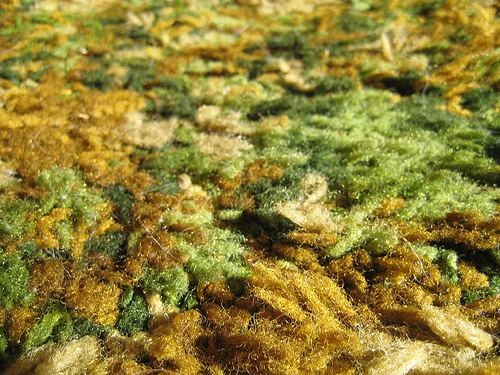
14. Your home’s carpets were a carryover from the 1970s in shades of dark brown, olive green, or marigold yellow shag. The cabinets and furniture were equally retro. 

15. You were well-acquainted with the “value menu” at fast food chains. Getting a combo meal was kind of a big deal. 

Tyler animated GIF

16. The YMCA or community center in your neighborhood was totally your spot. 

17. Most people have “that one family member” that they don’t talk about. Yeah, you have a few…
 quiet animated GIF

18. You were a pro at navigating public transportation well before it was the “green” thing to do.
 Cheezburger animated GIF

19. You thought skiing, surfing, golfing, playing tennis, and other bourge-y sports were just fun things to watch on the Olympics. Then you realized somewhere along the line that real people do those things for fun. And then when they asked if you wanted to come, you were like...
happy endings animated GIF


20. You are not only familiar with free and reduced lunch, but you probably also know what free and reduced breakfast is. But, dang, that oatmeal was delicious! Awe Chris Farley ;)

21. If you were lucky, you learned pretty early on that money doesn’t buy happiness. You figured out how to find it elsewhere. :)food, music, panda, pleasures, sleep

Monday, February 16, 2015

Some Poems

Grandma’s Sun Room

Grandma once had a sun room in the duplex up
on the hill. It was her space, laced with all things opulent,
including a telescope to spy on outer space. Upon
my first view, I saw multiple falling stars, and Jupiter
too. But maybe that’s an embellished memory made up
by the child in me. Children’s minds honestly operate
out of whimsy. For real, the room appeared transparent
with floor to ceiling windows imploring light to occupy
every square inch. A Swarovski crystal menagerie opened
my eyes to hundreds of rainbow refractions dancing upon
the wall. Twilight was the most beautiful time of all. Opposite
the cascading glass, a hearth warmed what wasn’t appeased
by the sun. I made a space of my own in this room, plopping
my whole self on the plush white carpet to line up
my marble collection, one by one. The sun knew how to pop
the aquamarines, indigos, greens, pearls, pewters, and coppers
in each, making them even more special to me. The room’s view proved
an un-ironic contrast. Capturing Casper’s un-developed
hills: rolling brown with sagebrush, bold sky, and antelope.
Looking out from my white glass orb, I suppose
the plain, uncomplicated wilderness warmly appraised
my introverted existence. The sun room was a place
I could escape from the noise, the conversation, the competition. A place
where the only gaze I had to face was that of the twinkling crystal blowfish upon
the shelf. Transparent
to me, the world around. Transparent
to it, all of me. Safe, though, in a glowing space
full of soft white noise, created by Grandma.


Looking at Life in Limericks

The pin said to complicate things.
I thought, “Well, I know what that means.”
But I didn’t know
It’d become my motto
Or quite just how true it would ring.

Because when we talk about race
It seems we have one saving grace:
To essentialize
And homogenize.
But then other issues take place!

Identities do intersect,
And privilege comes with context.
We must find a way
To come out and say
It’s not always what we expect.

We simplify things: black and white,
In efforts to make wrong stuff right.
But let’s take a stand,
It’s often: both/and
The complexities tend to shed light.

Friday, January 2, 2015

7 Things Men Need to Stop Doing to Women


1.    Attempting to one-up women’s stories and jokes. Although not always done consciously or with ill intentions, men routinely respond to women’s humor and storytelling by promptly dealing what they believe to be a cleverer quip or a more momentous experience. I’ve observed men doing this to each other, as well, which makes for a very competitive conversational atmosphere. In my experience, though, the acknowledgement women get from men for being funny or entertaining is sparser than what men offer to each other.

*The message this sends is: Your voice, perspective, experiences, and contributions are less valuable than mine. Therefore, I get to have the last word and the last laugh.

*What men can do instead: It’s fine to engage in an exchange of wit, but be more mindful of the intent and impact your responses have. Realize that, sometimes, the best response is a genuine laugh or an appreciative nod.


2.    Expecting women to look and be sexy for them at all times. Sure, heterosexual women may want to look and be sexy for heterosexual men on frequent occasions—and that’s fine. It’s also fine to want your significant other(s) to care about their appearance and your (collective) sex life. What’s not fine is when men ridicule and devalue women for choosing to present themselves in ways that are not concerned with the male gaze. E.g. wearing comfortable clothes and shoes, not wearing make-up, letting their hair go natural, taking up more space in their posture or sitting position, or not shaving. It’s also not fine for men to force, pressure, or guilt women into having sex with them. Certainly rape is the most extreme version of this, but it’s likely that a majority of men have at least shamed and blamed women for denying them sex or have pulled a pouty guilt trip.

*The message this sends is: One of your primary purposes as a woman is to please me sexually, and therefore your autonomy as an individual is less important. I am entitled to govern and control your body for my own benefit.

*What men can do instead: Honor the fact that women are multi-faceted, just like you, and their sexuality is only one of those facets. Take time to flatter women for qualities that are not related to their appearance. Besides, isn’t it sexier when women actually want to look and be sexy?


3.    Allowing women to clean up their messes at family and social gatherings. It may be less common these days for women to assume the sole role of “homemakers” and more obligatory for men to contribute to domestic labor (although, the progress is probably less significant than we think). However, it’s challenging to recall a single multi-gendered family or social gathering in which women didn’t disproportionately or entirely clean up not just their own messes, but the men’s too. Whether it’s after Christmas dinner or Friday game night, women are frequently observed clearing the table, washing the dishes, and re-organizing the space while men relax in their armchairs to watch the football game or shoot the breeze.

*The message this sends is: You, as a woman, are more suited to domestic labor than I am, as a man, and your time and energy are cheaper than mine.

*What men can do instead: Offer to help. Even if your offer is turned down, it still means something.


4.    Withholding their emotions from women. A long-standing social norm is for men to sparingly express their emotions, especially when those emotions are deep and potentially vulnerable (i.e. sadness, hopefulness, anxiety, fear, joy). Even the most modern, progressive men are prone to lapse into this socialization, especially when the going gets tough. And it’s not just women, of course, that men “protect” from their emotions, it is other men, as well. Arguably, however, heterosexual women bear the brunt of this behavior in their intimate relationships with heterosexual men, when the latter would often rather end the relationship than consistently resolve issues by sharing their feelings.

*The message that is sent by such stoicism is: Sharing my emotions makes me feel vulnerable, and vulnerability is characteristic of femininity. I don’t want to be associated with femininity, and I don’t trust you enough to be vulnerable in front of you. My pride is more important than the health of our relationship.

*What men can do instead: Allow yourself to be vulnerable, especially when it really matters. Don’t equate emotionality with femininity; it is inherently human to experience and express feelings. Recognize that withholding your emotions from the people you love is decaying your relationship with them.


5.    Telling women they are overreacting to or making up sexism. For every time a woman has experienced sexism, she has encountered at least one man who doubted or discounted that experience. It comes in the form of victims of sexual assault who are blamed for their dress or behavior when they report it to authorities, teachers, or even family members. It’s when those who have noticed androcentric language in dozens of standardized texts and works of literature and felt excluded by it are told that women fall under the umbrella of men, and they just need to get over it. It’s when women express their frustration that they often have to expend twice as much effort and resources to obtain the same jobs and opportunities afforded to men, and men assure them that they are being paranoid, and they probably just weren’t as qualified. Just as a white person cannot truly understand or even notice the daily experiences of a person of color, a man is at least moderately oblivious to the daily experiences of a woman.

*The message men’s denial of sexism sends is: Although I am not you and do not share the same gender identity, I believe that I know more about your experiences and perspective than you do. I care less about being a supportive advocate to you than I do about minimizing my male privilege because that makes me uncomfortable.

*What men can do instead: Listen to women when they talk about sexism. Although your initial reaction may be to disagree or feel defensive, this kind of response is unproductive and only reinforces the idea that women’s voices and feelings don’t matter. Try to empathize with women’s experiences, and offer words of support rather than defiance.


6.    Using derogatory, oppressive words to describe women. Many of the men I know would not regularly use words like “slut, “whore,” or “cunt” to describe women. However, most of the men I know have used these words on occasion, especially when they are angry or talking about a woman they deem to be sexually “promiscuous”. These words have been used to devalue and oppress women for as long as they have existed, and they all reduce women to sexual objects. It’s true that some women (and men) have tried to reclaim these words and use them with one another in a playful or empowering way. I would argue that this isn’t productive in advancing female empowerment, since reclaiming words implies that at some point they had a positive connotation dictated by the target group themselves. In any case, though, for a man to a call a woman one of these words is, in my opinion, akin to a white person calling a black person the n-word. It’s simply not appropriate because of the baggage it carries between the two groups, even if the intent behind using it is not malicious.

*The message that is sent by using these words is: To show my dislike for a woman, I describe her as being sexually “dirty” or a sexual object because I dualistically view her sexuality as both the most important aspect of her identity and the most objectionable aspect of her identity. Or, I am insensitive to the oppressive connotations behind these words and feel entitled to use them according to my own meanings and perspective.

*What men can do instead: Just avoid using these words. It can be hard at first because we all grow up hearing them from multiple sources and, in a moment of frustration, we may not be readily able to come up with another word to capture our feelings. But it’s important to recognize that language matters. Words are symbols of our values and ideas, so consider the impact they can have.


7.    Being intimidated by women’s confidence and success. I think we can all agree that women have made major progress throughout history in standing up for themselves more, being more comfortable in their own skin, acting more assertive, and advancing their own success. I think we can also all agree that many men have played an important role in supporting this progress and have made progress of their own by changing their attitudes about women’s roles in society. Unfortunately, it is still true that many men feel threatened by a confident, successful woman, especially when they don’t view themselves as being equally or more confident and successful. I have known well-meaning, open-minded men who were fine with the idea of women’s power and progress until it was their own partner, family member, or supervisor. They would talk the talk of feminist advocacy, but then would be discouraged and annoyed if their partner made more money than they did or would criticize women in positions of leadership in ways they would not criticize men in the same positions. 

*The message this sends is: Even though I may want to or feel obligated to believe that women deserve the same (or more) power and success as men, I don’t really believe that. I view your confidence as unlikable and unfeminine, and I view your success as a personal slight to me. My identity and sense of self-worth is defined by your inferiority.

*What men can do instead: Check yourself on this double-standard. When you feel intimidated or resentful towards a confident, successful woman, recognize that it’s something you need to work on internally, rather than something she needs to change for you. Encourage, support, and congratulate women for their accomplishments, and you will feel better about your own.